


Your cart is currently empty!.
You may check out all the available products and buy some in the shop.
Continue Shopping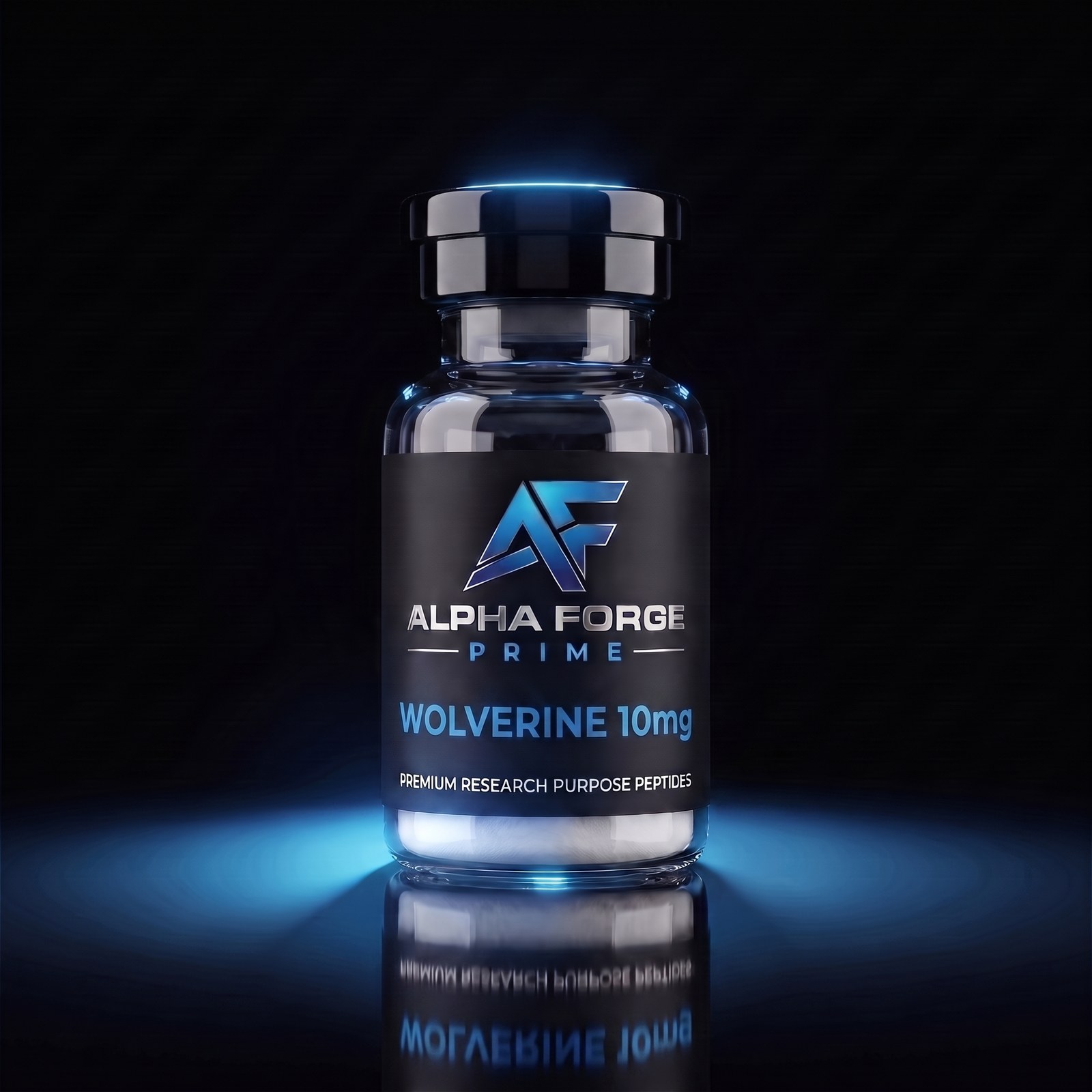
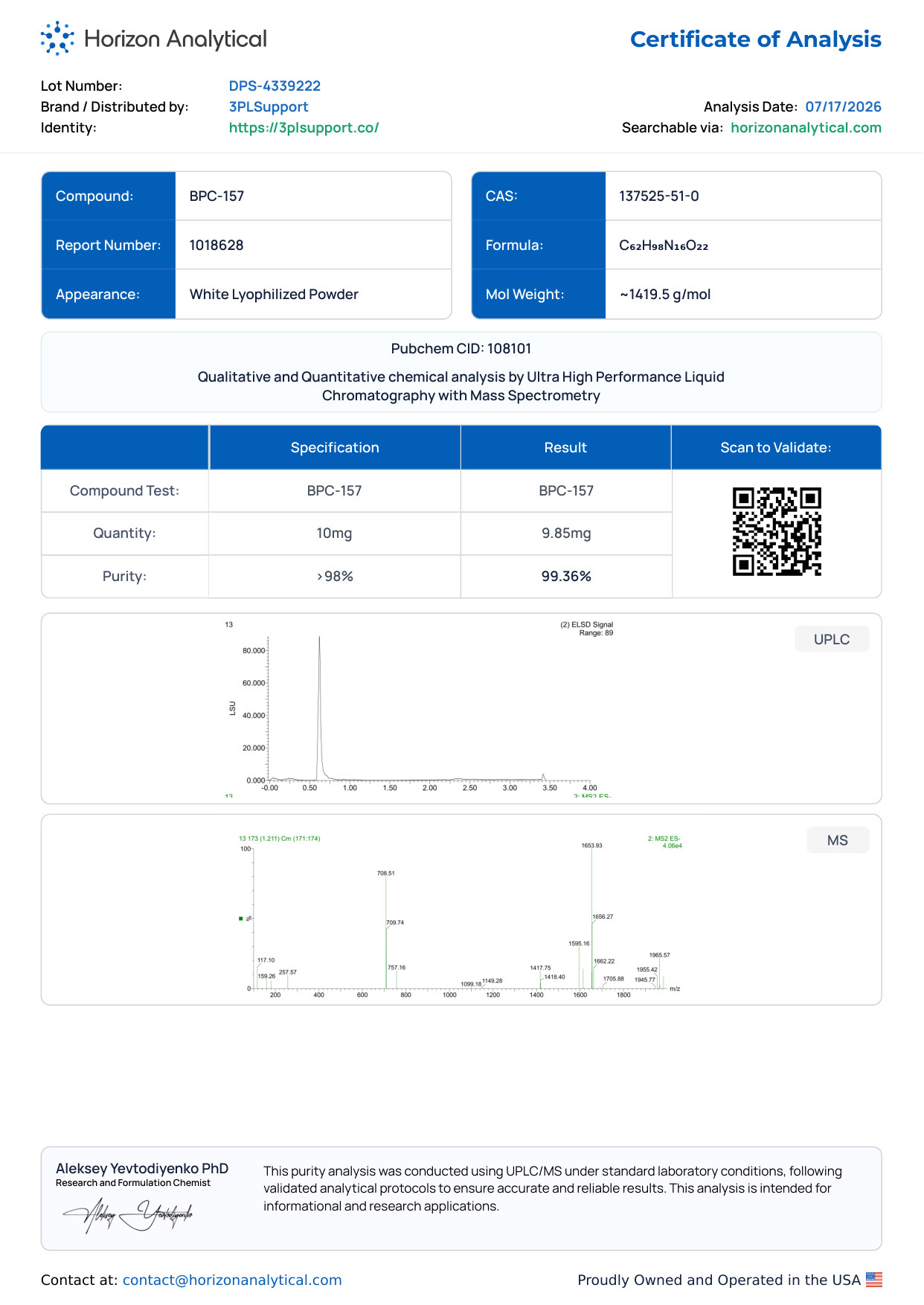
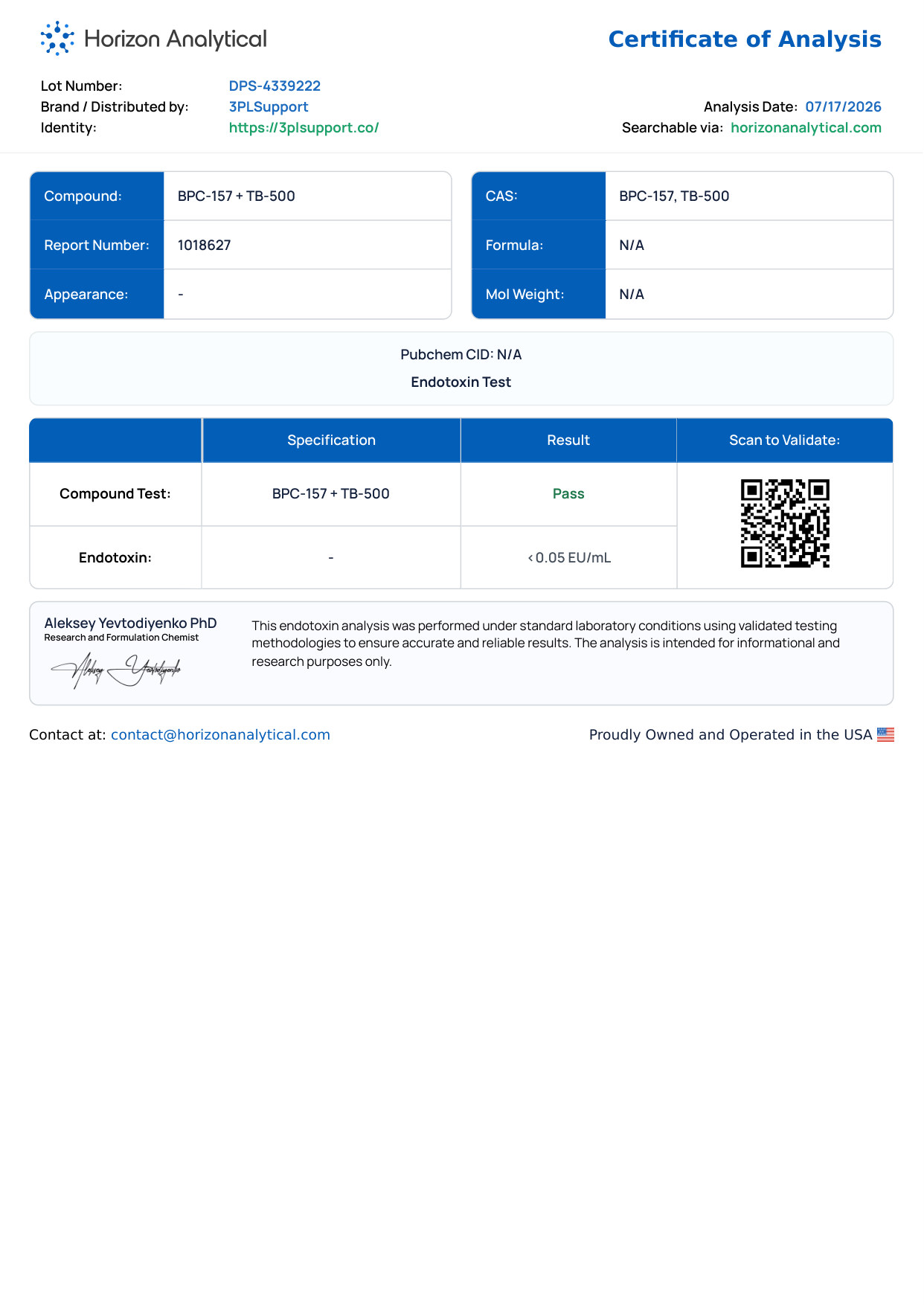
Wolverine 10mg is a co-lyophilized blend of BPC-157 5mg and TB-500 (thymosin β4) 5mg, supplied as a lyophilized powder in a single sealed vial containing 10mg combined net content. It is the smaller-format version of Wolverine Pro (20mg). “Wolverine” is the catalog designation for this pairing; it is not a compound name and carries no meaning beyond identifying the blend. Each lot is analyzed by HPLC and mass spectrometry; the certificate of analysis for the current lot is shown in the product images and in the COA library. Both compounds are also available as single-compound listings.
| Composition | BPC-157 5mg · TB-500 5mg (nominal, co-lyophilized) |
|---|---|
| BPC-157 | GEPPPGKPADDAGLV, 15 residues · C62H98N16O22 · 1419.5 g/mol · CAS 137525-51-0 |
| TB-500 (thymosin β4) | 43 residues, N-acetylated · C212H350N56O78S · 4963.4 g/mol · CAS 77591-33-4 |
| Form | Lyophilized powder (acetate salts), single vial, white to off-white |
| Quantity | 10mg combined net content per vial |
| Purity / identity | HPLC purity and MS identity verified per lot — see the lot-specific COA |
| Solubility | Water-soluble |
| Origin | Synthetic (solid-phase peptide synthesis) |
BPC-157 and thymosin β4 are routinely mentioned together in the research-peptide literature and are routinely conflated, but they are not similar molecules. BPC-157 is a 15-residue synthetic fragment of a human gastric-juice protein, described in the early 1990s by Sikirić and colleagues in Zagreb and studied almost entirely in rat models by that one group. Thymosin β4 is a 43-residue actin-sequestering protein present in nearly every mammalian cell, isolated from calf thymus in 1981 by Low, Hu and Goldstein and studied since by many independent groups in actin biochemistry, cell-migration assays and animal wound models. The pairing is a market convention rather than a chemical or biological one. These are laboratory findings in cells and animals; they have not been replicated in controlled human trials, and no conclusions about human effects should be drawn from them.
The analytical requirements of the two components are different, which is why a single purity figure for the mixture should be read cautiously. BPC-157 gives a single clean HPLC peak and an unambiguous [M+H]+ near 1420; Tβ4 elutes later, produces a charge-state envelope on electrospray MS that deconvolutes to ≈ 4963, and has an oxidation-sensitive methionine. A useful COA for this blend shows both principal peaks, both masses, and the method used.
Handling and storage: Lyophilized powder in a sealed vial. Store at −20 °C for long-term storage or at 2–8 °C for short-term storage, protected from light and moisture. Allow the vial to reach room temperature before opening to prevent condensation.
Disclaimer: This product is furnished strictly for in-vitro laboratory research. It is not a drug, has not been evaluated or approved by the FDA, and is not intended for human or animal consumption or for any medical, veterinary, diagnostic, cosmetic or household use. The research background above summarizes the published literature for the benefit of researchers; it does not describe, and must not be read as describing, any effect in or use by humans.
| Weight | 0.2 lbs |
|---|
Independent U.S. laboratory testing. Batch-specific certificates below.
| Purity Lot | DPS-4339222 | Endotoxin Lot | DPS-4339222 |
|---|---|---|---|
| Analysis Date | 07/17/2026 | Result | Pass |
Orders are processed within 1–2 business days and shipped USA-only with tracking. Lyophilized peptides are stable at ambient temperature in transit, so no cold chain is required.
Because of the nature of research materials we accept returns of unopened, unused products only, and we make it right on anything damaged or incorrect on arrival — full details in our Refund, Return & Cancellation Policy.

Takes 5 seconds — your cart is saved.
For Research Use Only. Not For Human Consumption.
Alpha Forge Prime
Part of our catalog is reserved for registered researchers. Registration takes under a minute and requires no documents — just a short research-use attestation.