


Your cart is currently empty!.
You may check out all the available products and buy some in the shop.
Continue Shopping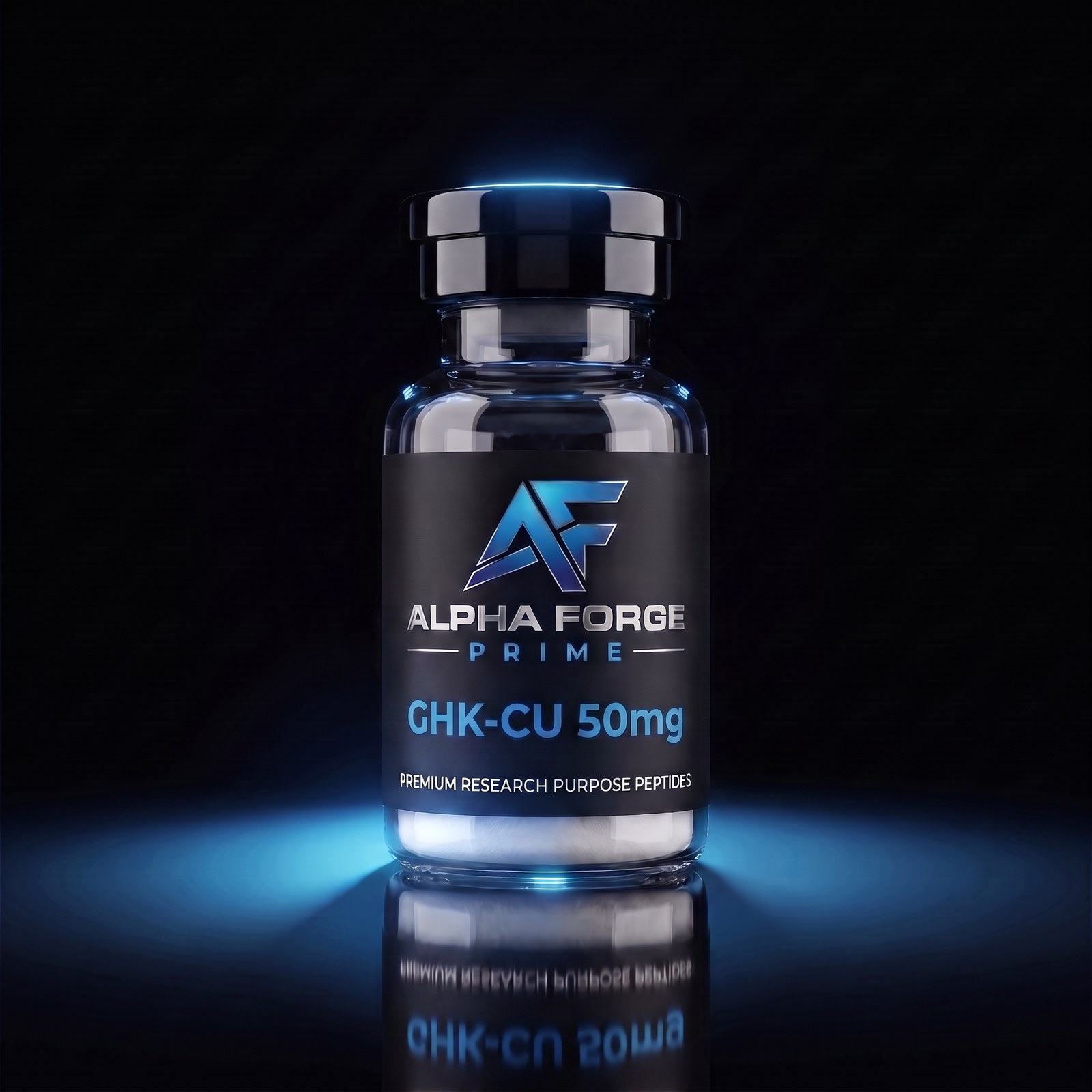


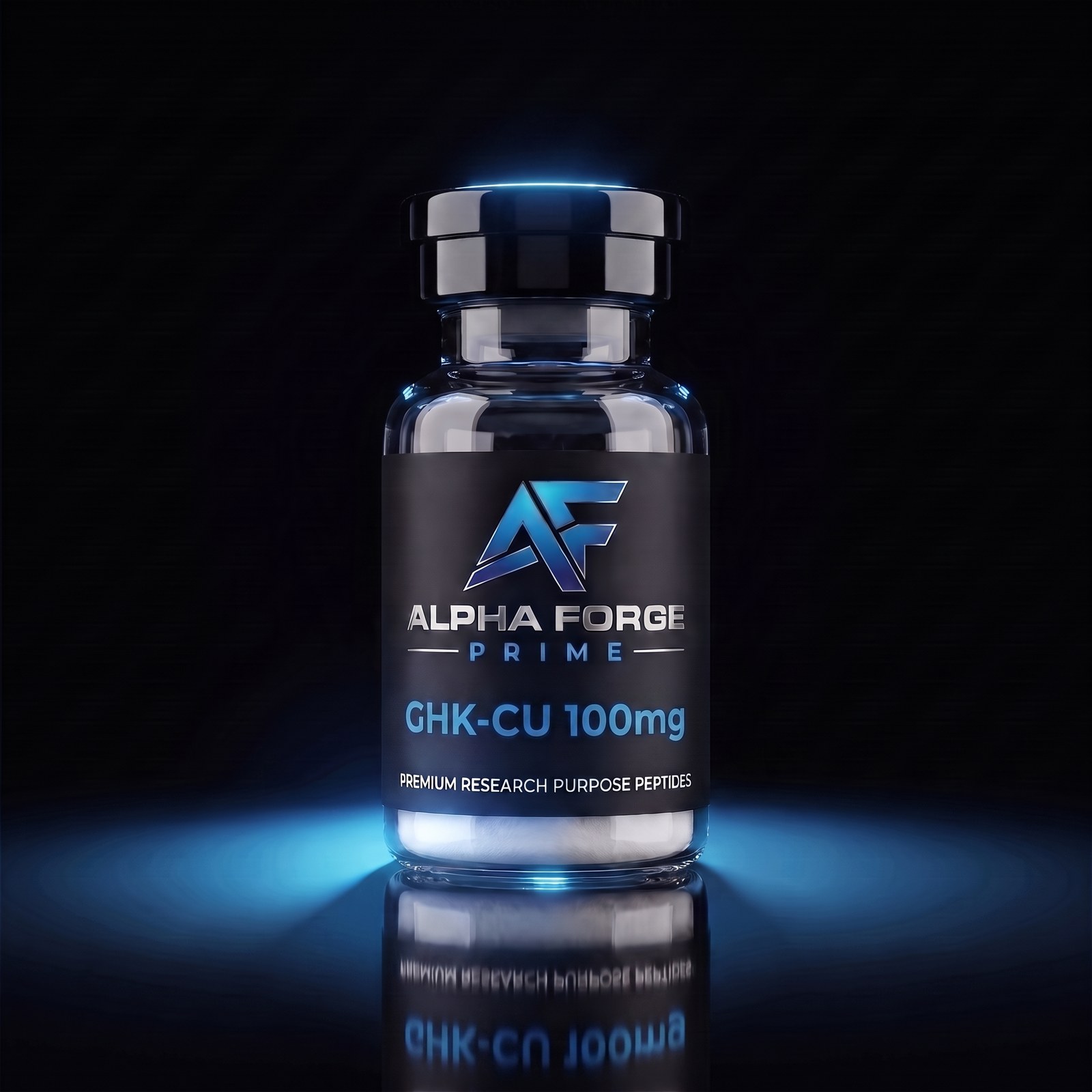
GHK-Cu 50mg is the copper(II) complex of the naturally occurring tripeptide glycyl-L-histidyl-L-lysine (GHK), known in cosmetic chemistry by its INCI name Copper Tripeptide-1. It is supplied as a lyophilized blue powder in a single sealed vial containing 50mg net GHK-Cu. Each lot is analyzed by HPLC for purity and by mass spectrometry for identity; the certificate of analysis for the current lot is shown in the product images and in the COA library.
| Sequence | H-Gly-His-Lys-OH · Cu(II) (GHK-Cu) |
|---|---|
| INCI name | Copper Tripeptide-1 |
| Molecular formula | C14H22CuN6O4 (GHK-Cu); C14H24N6O4 (free GHK) |
| Molecular weight | ≈ 403.9 g/mol (GHK-Cu); 340.4 g/mol (free GHK) |
| CAS number | 89030-95-5 (GHK-Cu copper complex); 49557-75-7 (free GHK tripeptide) |
| Form | Lyophilized powder, characteristic blue-violet colour from the Cu(II) complex |
| Quantity | 50mg net GHK-Cu per vial |
| Purity / identity | HPLC purity and MS identity verified per lot — see the lot-specific COA |
| Solubility | Freely water-soluble; solutions are blue |
| Origin | Synthetic (solid-phase peptide synthesis, complexed with copper) |
GHK was first isolated from human plasma in 1973 by Loren Pickart, who observed that the tripeptide occurs naturally in plasma, saliva and urine and that its concentration declines with age. It binds copper(II) with high affinity, and the resulting GHK-Cu complex is the form most studied. The compound is unusual among research peptides in also being an established cosmetic ingredient: as Copper Tripeptide-1 it appears in the INCI dictionary and in a large number of commercial topical formulations.
The laboratory literature — summarized in Pickart and Margolina’s 2018 review in the International Journal of Molecular Sciences — covers collagen and glycosaminoglycan synthesis in cultured fibroblasts, wound-repair models in animals, gene-expression profiling in cell lines (the Broad Institute’s Connectivity Map data showed GHK modulating expression of a large set of human genes), and copper chelation and transport chemistry. As with all compounds in this catalog, these are in-vitro and animal findings; they do not describe effects in humans.
Analytically, GHK-Cu is easy to identify by its colour and UV-visible absorbance, but HPLC methods must account for the copper complex; purity is generally reported on the peptide, with copper content confirmed separately.
Handling and storage: Lyophilized powder in a sealed, nitrogen-flushed vial. Store at −20 °C for long-term storage or at 2–8 °C for short-term storage, protected from light and moisture. Allow the vial to reach room temperature before opening to prevent condensation.
Disclaimer: This product is furnished strictly for in-vitro laboratory research. It is not a drug, has not been evaluated or approved by the FDA, and is not intended for human or animal consumption or for any medical, veterinary, diagnostic, cosmetic or household use. The research background above summarizes the published literature for the benefit of researchers; it does not describe, and must not be read as describing, any effect in or use by humans.
Independent U.S. laboratory testing. Batch-specific certificates below.
| Purity Lot | DPS-9372216 | Endotoxin Lot | DPS-9372216 |
|---|---|---|---|
| Analysis Date | 07/17/2026 | Result | Pass |
Orders are processed within 1–2 business days and shipped USA-only with tracking. Lyophilized peptides are stable at ambient temperature in transit, so no cold chain is required.
Because of the nature of research materials we accept returns of unopened, unused products only, and we make it right on anything damaged or incorrect on arrival — full details in our Refund, Return & Cancellation Policy.

Takes 5 seconds — your cart is saved.
For Research Use Only. Not For Human Consumption.
Alpha Forge Prime
Part of our catalog is reserved for registered researchers. Registration takes under a minute and requires no documents — just a short research-use attestation.